Pages

Friday, October 21, 2011

Snowpeak - natural lifestyle creator

He sits down to a family dinner only a few times a month as his hectic schedule takes him everywhere, throughout Japan and overseas. He often works from morning to midnight.

Is Snowpeak’s president Tohru Yamai a typical Japanese workaholic out to get rich? No, he says, he mainly works to make his community wealthier and its people happier. However, he is ambitious and his ambitions have grown bigger and bigger over the years as he has expanded the business that was handed down to him from his father.
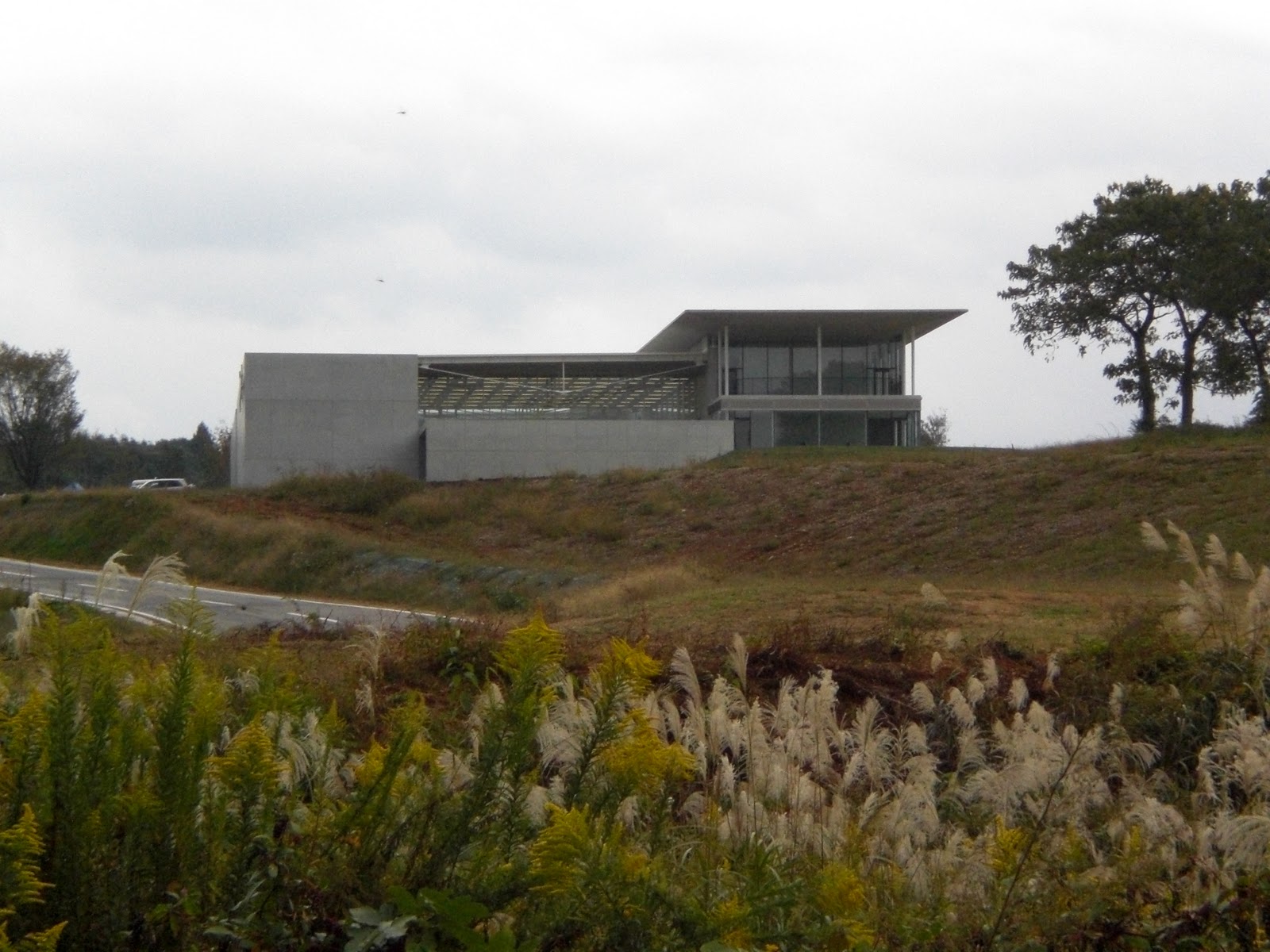
His business’s success has allowed him to open a new company headquarters on a hilly ranch site four times as large as the Tokyo Dome baseball park in the Shitada District of Sanjo City in April. The site was chosen because Snowpeak deals with the production and distribution of outdoor gear, and the areas surrounding the new building are some of the best camping sites around.

Along with the new headquarters, 60 of his 130 staff members moved to Shitada, planning, designing, producing, selling and even repairing high class goods there in this all-in-one building. The office building won an award for Good Design from Japan Institute of Design Promotion.

He said Snowpeak brand goods are more luxurious than those used by most traditional campers, but they are also highly user-friendly and fashionable. Likewise, his camping sites are of a more sanitary-design and are as equally luxurious as the goods he sells. However, his company doesn’t just please those of us who enjoy camping right here in Sanjo, it also has shops throughout Japan as well as foreign countries such as Korea, Germany and the USA.

Mr. Yamai’s unstoppable quest for excellence didn’t just start after he came to be president of the company. Even back in his high school days when he was on the baseball team, he played with the sole goal of playing for the national high school championship at Koshien Stadium. He had dedicated his whole life to that point to baseball.

After entering university in Tokyo, he pursued his outside interests with far more dedication than he gave to his course work. However, as he grew to be a full-fledged member of society, he began to channel the same energy he had spent on sports and partying to helping others. When a devastating flood hit Sanjo City in 2004, he volunteered to help in the cleanup every day for more than three weeks, without ever visiting his office. Likewise, after the great 3/11 earthquake, his company collected a total of 10,000 tents, sleeping bags, mats and rugs from all over Japan and provided them to many victims and many volunteers who were helping out with search, rescue and restoration projects.

These days, a lot of his energy is devoted to sharing his love for nature and healthier lifestyles. When he’s not doing that, he is helping to foster young and energetic entrepreneurs and business people by volunteering his experience and knowhow. When he was still an active member of the Japan Junior Chamber, the older members tutored him and helped him to “grow up” and he now feels compelled to give back.


As for his company, he hopes that it will be able to serve 100,000 customers a year in five years. As a “citizen of the earth,” as he sometimes refers to himself, he simply wants to contribute positively to society.

Sunday, October 16, 2011

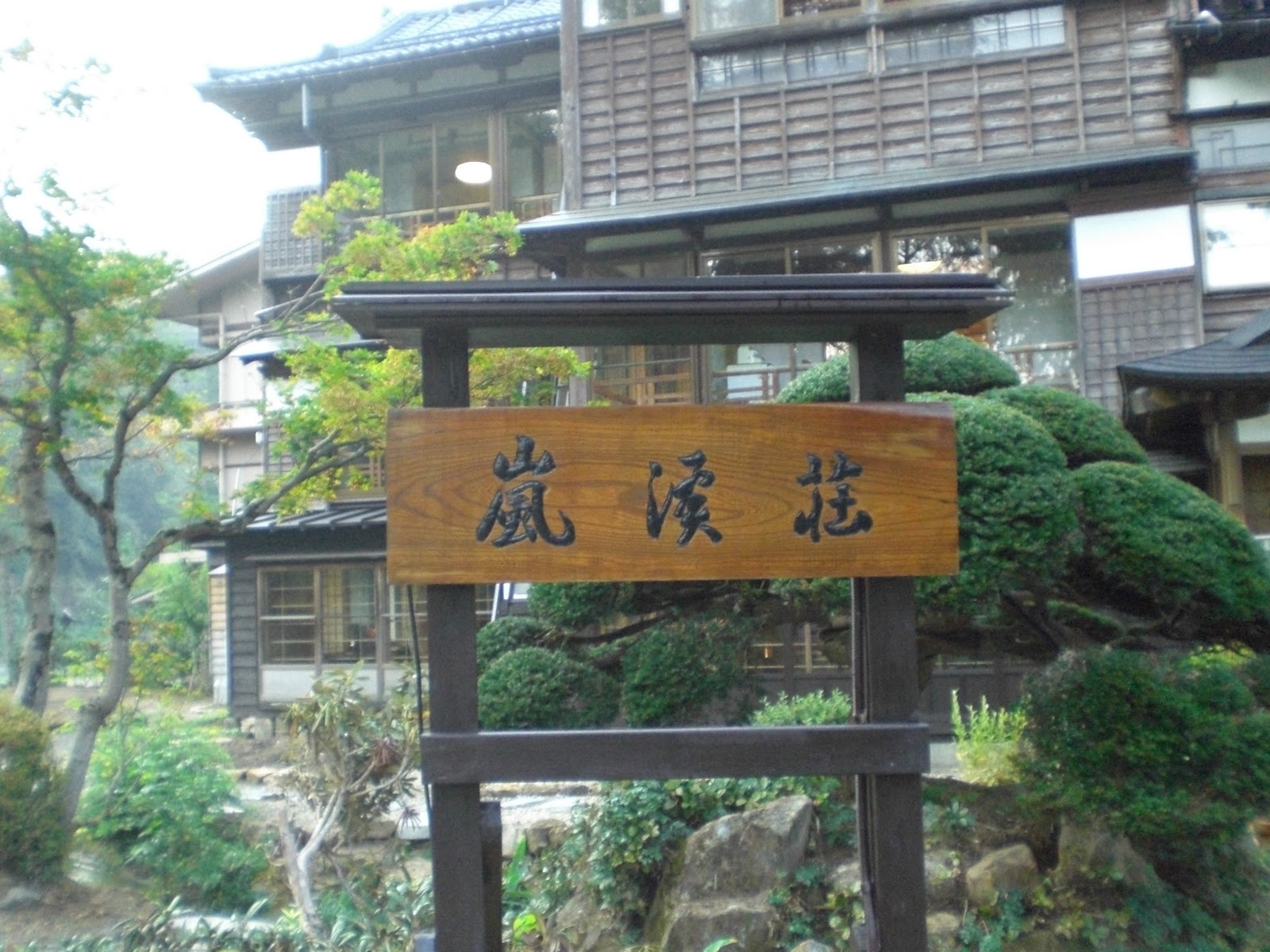
Time-Honored Classy Onsen Ryokan, Rankeiso

Rankeiso, located in the Shitada area of Sanjo City, is popular among “onsen” lovers young and old as it is one of Niigata’s best hot spring inns. http://www.rankei.com/

When I was a high school teacher in Sanjo, I often volunteered to be an organizer of school parties in order to choose Rankeiso as the venue as it is an ideal setting for relaxing parties.


Recently, I met Rankeiso’s president, Keigo Otake, who is the fourth-generation manager of this family-owned inn. Though he comes across as a bit shy, he is not timid when he speaks about the three points that make his inn one of Japan’s best secluded hot spring spots.


First, he noted, the quality of the inn’s onsen baths is outstanding. The cold spa water is quite rich in minerals and surprisingly tasty. It is a little salty and tastes like seaweed tea. He even uses the water to make Onsen-gayu, a special type of rice porridge for breakfast.


A second factor that makes this inn an unforgettable experience, he noted, is the tantalizing cuisine. Four distinguished chefs turn any of the inn’s traditional country-styled dishes into a high-class banquet. (Having recently attended a family reunion at the Rankeiso where we partook of many of the inn’s best delicacies, I can personally attest that this is no exaggeration.)
              
The third element, he touched on, and perhaps the most important, is how the inn lies in gentle harmony with it natural surroundings. Scenic woods envelope the inn while the Sumon River runs beside it, allowing those who come there to feel as one with nature.
              

During our talk, Mr. Otake noted that the “Go” in his given name, Keigo, means “five.” In this way, his parents and grandparents consigned in him five wishes. He didn’t say a lot, but he knows what his family expected of him and he is obviously full of high hopes for his inn.
              
He didn’t brag about his high ambitions to expand his business, but he did modestly mention that he would like to keep pace with the times. He then concluded my interview by saying he envisions the future of his inn, the village and its people, all the time.

Saturday, October 1, 2011

English Lessons in San Francisco


Niigata University of Management, where I teach English pedagogy, sends students to overseas schools each year. Students here have opportunities to visit campuses in China, South Korea, Taiwan and the United States.

Last month from September 4th to 17th, I escorted a small group of students who wanted to study English to San Francisco. They attended Notre Dame de Namur University in Belmont, south of San Francisco, which has an affiliated language school within the campus that offered them a two-week special language course.

I was responsible for taking care of them during the program, but while I stayed at a local motel in Belmont, the students were staying with host families in San Francisco. It was good for them to be able to meet and learn how American students spend their home and campus lives.

The language school, named TALK, offers English courses to meet the needs of a wide variety of students. My students took a placement examination at the beginning of the course, and were put into suitable small-sized classes.

Notre Dame de Namur University was founded in 1851 and is one of the oldest universities in California. (http://www.ndnu.edu/) The campus is located about twenty minutes south of San Francisco. The famous Silicon Valley, home to Google, Yahoo, Intel and Apple, is ten minutes away, and it is also a close neighbor Stanford University. Like San Francisco, Belmont’s weather is gorgeous, always mild, cool and clear, though walking around in the sun can still leave you sweaty.

The language school provided a lot of extra activities, such as sightseeing trips to downtown San Francisco, tickets to a San Francisco Giants’ baseball game and a bicycle outing that took us across the Golden Gate Bridge. As a proponent of international exchange programs, I believe programs like this truly expand a student’s knowledge and provide the kind of perspective and experience needed in today’s global society.

Friday, September 30, 2011

Iiyuratei Spa Reopens in Novemeber

Two months have passed since a dreadful torrent washed away several places in the Shitada district. Most of the devastated areas have been restored, but there are still many places along the mountainous roads and rivers that have not been. Full restoration will take more time.
One such area is Shitada’s most popular resort facility. Its name, Iiyuratei, is a pun based on a local dialect, meaning “It’s indeed good hot water.”
The spa, which looks down from the spectacular view atop Mt. Yagigahana, just upstream from the Ikarashi River, was damaged to a great extent and will need another month of repairs before reopening. Once it does, I highly recommend going there as it is in walking distance of the beautiful rice terraces of which I am particularly fond. The hot spring and health facility, which welcomes Onsen lovers throughout the year, is also connected to the Hayabusa Sports Center and is in the vicinity of the Yagigahana Auto Camping site. I think it is an ideal place to spend a weekend. http://www.iiyuratei.com/

Thursday, September 22, 2011

We’ve had enough natural disasters.

In Japan, everywhere, except Hokkaido, experiences “the rainy season” before summer. Traditionally, we have had very steady rain during that time. We have also tended to get our fair share of typhoons in summer and fall. These rains have made our country rich in water and crops.

However, recently, it never rains but it pours. This week, another big typhoon, the second in a month, rampaged through Japan. It is now common to read in the reports of the Meteorological Agency phrases like “the most powerful typhoon on record,” “the warmest day/summer/year on record,” “the largest storm in recorded history,” and so on.

The Ikarashi River in Sanjo City, famous for its beauty, was believed to have been rendered harmless after its banks were reinforced following what was believed to have been a 100-year flood that damaged large portions of my hometown seven years ago.

However, on July 31, we experienced rainfalls so heavy that even this new infrastructure was overwhelmed and the overflow again destroyed many houses, buildings, roads and even the terraced rice paddies that I mentioned in a previous blog. “A natural disaster strikes when people lose their memory of the previous one” is an often quoted Japanese saying. These days, with the last disaster still fresh in our minds, another one comes without mercy. If these recent abnormal weather patterns represent my country’s new normal, then we truly need to learn how to live with disasters.

 These pictures show Sanjo City in 2004.
http://www.mlit.go.jp/river/pamphlet_jirei/bousai/saigai/kiroku/suigai2004/hokuriku.html

 This one was taken this past August. http://www.kenoh.com/2011/07/29rain.html

Wednesday, June 15, 2011

Himesayuri Lilies and Tanada Rice Terraces

On a fine sunny June day, I went to admire the official Sanjo City flower, himesayuri, and tanada, the terraced rice fields at Kita-Imogawa. This hamlet, which is located on the outskirts of Sanjo City, faces the eastern side of the cliff off Mt. Yagigahana (see the picture shown with the title of this blog article).

Himesayuri, my most favorite flower, literally means “princess lilies,” but is translated as “star lilies” by Sanjo City officials. Its alternative name is otomeyuri, “maiden lilies.” They are listed as endangered, and can be found only in a limited number of places in Japan, but they are ubiquitous around the ruins of Takajo Castle and its surrounding hiking trails.

Around this area, the somewhat dainty flower is known to bloom from mid-May to mid-June. The flowers in the pictures below were not from Takajo, but were unexpectedly found along the paths of the paddy fields at Kta-Imogawa. When I saw them, I wished they had been protected by ringed fences.


Look at the beautiful photos of Tanada below.
The Kita-Imogawa’s tanada is listed as one of Japan’s top 100 terraced rice fields by the Ministry of International Trade and Industry of Japan. The rice-planting season was just finished a few weeks ago, and I believe this is the most beautiful time of the year to view them.

I feel so serene looking down at the village from the top of the tanada.

It is definitely easier to plant rice in plain fields, but the lack of space in the mountainous villages made farmers decide to reclaim heavy slopes, creating graduated terrace steps. These turned to be some of the most delicious rice produced in Japan as these mountainous areas are rich in pure waters from melted snows, a determinative of the quality of rice.

Niigata prefecture is the largest, sometimes second largest, producer of rice output in Japan. For that reason, Niigata is also the biggest sake and rice cracker producer as well.

If you get the chance, why don’t you hike along Shitada’s trails?

Monday, May 30, 2011

My colleague is appearing in the TV program

On the set of NHK's Netchu Stadium

My colleague, Tim Finney, visited NHK Studios to tape an episode of Netchu Stadium. Tim, an English language instructor at Niigata University of Management, was included on a panel of thirty guests that talked about American comic book heroes who are popular in Japan. During the taping, he was situated right behind the special guest panelists. He said, "We filmed two 45 minute shows. This (picture) shows the set as it was during the first show, which was primarily about the Marvel Comic characters, Spider-Man & Iron Man. See if you can spot me amongst my fellow ‘otaku’ (nerds)!”
The shows run on 6/9 & 6/16 on NHK's BS Premium at 11:30 p.m.
https://www.nhk.or.jp/n-stadium/23thm/thm_s_mail.html