Pages

Friday, March 23, 2012

Gyosei Koko puts some muscle into its English education program

In the vicinity of my college, there are its affiliated schools, Niigata Chuo Junior College and Kamo Gyosei High School. Gyosei Koko is unique and well known in that it is the single high school in Niigata Prefecture offering a nursing course.

Recently, the school won a grant under the auspices of the Niigata Prefectural Government. The grant, which runs for a certain period of years, is offered to private senior high schools that have plans to foster international human resources and to improve their English education. Programs offered under the grant include special Saturday English classes, access to on-line English education, a school excursion to Singapore and special tutoring to help students pass difficult English proficiency examinations and college entrance examinations.

Another of its programs was a three-day intensive English seminar that was held in early March at Niigata University of Management. I was involved in the seminar, helping design the program. I also collaborated with the high school teachers in charge.
 豊かな人間性を備え、時代の変化及び社会状況に対応し、未来を託す有為な人材の育成
During the course of the seminar, about thirty-five students learned oral English under six native-language instructors of English. The purpose of this program was to “give the students opportunities to express themselves in English and have cross-cultural experiences. It went well, in the end, but it was not without some bumps.

There was a good deal of confusion at first as to what the school was attempting to accomplish. The vague quality of the directions only added to this. To be fair, the school had never attempted such an undertaking in the past.

I was glad to see that Gyosei Koko is trying to strengthen its English programs through this grant, but there is obviously some room for improvement. In the near future, I hope to give the teachers an awareness-raising workshop in English that will encourage the teachers to be even more ambitious in order to take full advantage of this opportunity.


Friday, January 27, 2012

Todai Calls for Fall Enrollment

Todai or the University of Tokyo could move the start of its academic year from autumn to help it compete with overseas rivals and help students wanting to study abroad.
A school working group proposed in an interim report that the university stop accepting students in April, the tradition in Japan, and shift to a fall enrollment system, which is common abroad.
The university hopes to reach a formal decision by the end of March after each department has studied the proposal. (The Asahi Shimbun, 1/18/12)

I am for the proposal, but my reasoning is a little different than the ones given in the report above. Recently, my daughter has taken many college entrance exams during January and February as her high school life comes to a close and she prepares for her future. In Japan, it is still common for students to take entrance tests to multiple universities.

As her parent, I have had the responsibility to make sure that she gets to these tests at the appointed place and time. However, here in Niigata Prefecture, in winter, there is much snow, trains are often delayed and the roads and highways can be treacherous with ice, snow and slow-moving traffic.

Also, right now, it is cold and flu season. In Sanjo City, where we reside, four public schools have been closed because of an influenza epidemic. Because of this, my family and I have not dined in public or gone anywhere to relax for fear of my daughter getting infected before one of her tests.

In March, things aren’t much better. Not only is there still the danger of snow and infection, but nationally, because of the preponderance of cedar trees, it is the height of the hay fever season. Recently, the amount of pollen in the air has been increasing and some people have had severe problems dealing with this condition.

I’m not sure what kind of pressure my daughter is feeling, but I have felt under pressure just to make sure she is able to perform her best under the most normal conditions as possible. A lot of these problems would be eliminated if the test dates were moved to summer.
The pictures show my house and garden after a recent deep snowfall.
The pictures show a pine tree that has been professionally trimmed similar to a bansai tree and other trees. To protect them from the wet and heavy snows we get here, we had professional gardeners use ropes and long bamboo poles to give them support. Niigata Prefecture is famously known as “snow country.” 

Friday, November 25, 2011

Honma Dekka? An Exchange Program

The other day, I met an Australian girl who has come to my home prefecture as an exchange student. She told me she would be attending school in Niigata City for the next two months and was interested in Japanese fashion and culture.

This was her second trip to Japan as she had visited Tokyo, Kyoto and Miyajima on a school-sponsored excursion two years ago. I noticed that she always carried a book with her and she admitted to me that she was something of a bookworm. I found her to be quite engaging and smart.

I immediately liked her. Admittedly, however, I am almost predisposed to liking exchange students. You see, I spent the summer of 1977 in Annapolis, Maryland with a wonderful family whom I am still in contact with to this very day.

Also, my son spent a year as an exchange student in Raleigh, North Carolina. It made such an impression on him that he decided to spend a year in Venice, Italy to study philosophy and international relations at a university there.

As my blog mentions, I am the chief of the Niigata chapter of the Experiment in International Living. In fact, the Australian girl I met came here under the auspices of my organization.

Coincidentally, I was watching a Japanese variety show, “Honma Dekka” (“Is it True?”), which is hosted by the famous Japanese comedian, Akashiya Sanma. One of his guests was a chiropractor, Takuma Usuda, who seemed very familiar to me.

Suddenly, I realized that he was one of the students that I had taken on an exchange visit to Springfield, Illinois some 25 years ago. I was so surprised to see him, I went online and found his email address and sent him a message.

He wrote back that, not only did he remember me, but that he also felt that he owed me a lot. He told me that he attributed much of his success in life to that summer he spent in the States and that it had encouraged him to study abroad.
He told me that he owns a practice in Tokyo and that he also teaches part-time at Waseda University. We have since made plan to reunite in Tokyo sometime in the near future and talk about old times, perhaps over a cup of sake.

This is why I have such a passion for exchange programs. I truly feel that they can make a difference in the lives of the students who participate in them. I want students to go abroad and I want to find families who would like to act as host families for these students. If you are interested in hosting exchange students, please feel free to contact me. I would love to hear from you.

Tuesday, November 1, 2011

KAKURI Corporation

Mr. Mutsuhiro Kato, the vice president of KAKURI Corporation, is like a magnate, attracting the attention of other entrepreneurs in Sanjo City. He often tells people that dreams can become goals if you work hard.

He said he used to dream of selling his wares all over the world, but it now is a goal that has been partly attained. “It takes time,” he said, “but I never give up.”

(The chisels won an award for Good Design from Japan Institute of Design Promotion.)↓
Sanjo City has long been noted for the production of hardware and metal ware tools and goods. KAKURI Corporation, which deals mainly with carpenter tools, such as saws, planes, chisels, knives and kitchen cutleries, stands out amongst its competition.

Mr. Mutsuhiro Kato, who is in charge of the KAKURI Corporation’s factory sector, KAKURI WORKS LTD., said that half of the products made by the factory are sold to overseas clientele. Its high-quality tools are particularly popular in China, where it has shifted much of its production.

While he had some struggles breaking into China’s market, after doggedly negotiating with Chinese buyers for ten years, he gradually gained friendships and trust and slowly built the company’s reputation there.

Mr. Kato, who continues to tirelessly meet with businesspersons from around the world, hopes to expand his company’s global sales even further. His next dream is to increase sales in Europe, and he, along with other young, up-and-coming entrepreneurs in the Tsubame-Sanjo area, make an annual trek to display their commodities at a trade fair in Ambiente, which is in Frankfurt, Germany.

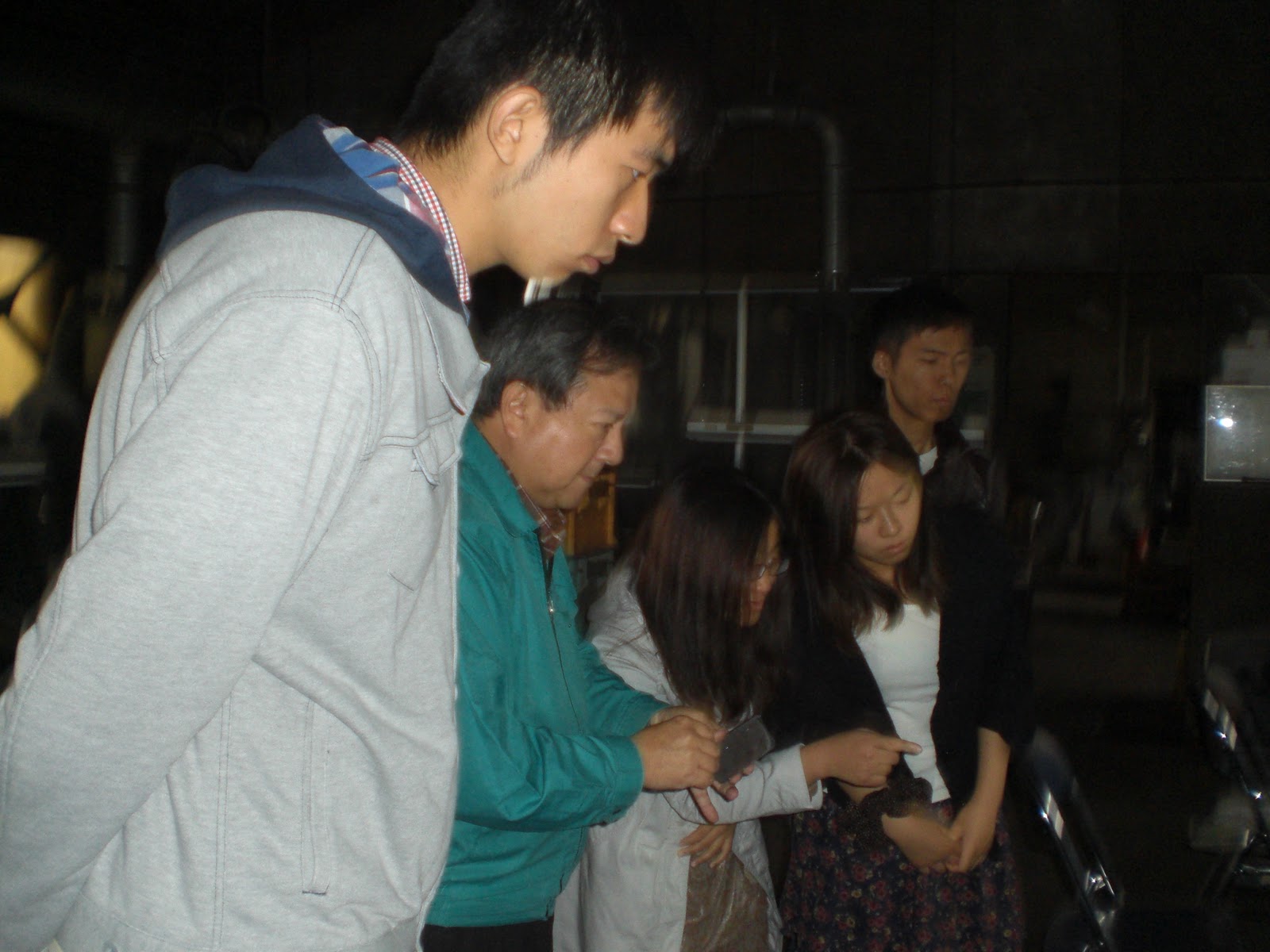
Likewise, when Europeans and other foreign businesspeople visit this area, they often visit his company and he acts as their host. English, he says, is the language they often communicate in.

 (Mr. Kato with Chinese students at his factory in Sanjo City.)

He is such a diligent worker that many people ask to hear about his successes; however, he is not reluctant to disclose his failures, and welcomes anyone who wants to learn from him. If he is asked to talk about exports from Sanjo City, he never hesitates. He often gives lectures to business and community groups and sees these as opportunities to volunteer his knowledge.

He loves these opportunities to greet people from all over the world and views these “chance meetings,” as he calls them, as very important. Whether it is in Japanese or English, he loves communicating.


(With consummate skills, KAKURI's accomplished, experienced hand finalizes ultimate-level blades.)

Friday, October 21, 2011

Snowpeak - natural lifestyle creator

He sits down to a family dinner only a few times a month as his hectic schedule takes him everywhere, throughout Japan and overseas. He often works from morning to midnight.

Is Snowpeak’s president Tohru Yamai a typical Japanese workaholic out to get rich? No, he says, he mainly works to make his community wealthier and its people happier. However, he is ambitious and his ambitions have grown bigger and bigger over the years as he has expanded the business that was handed down to him from his father.

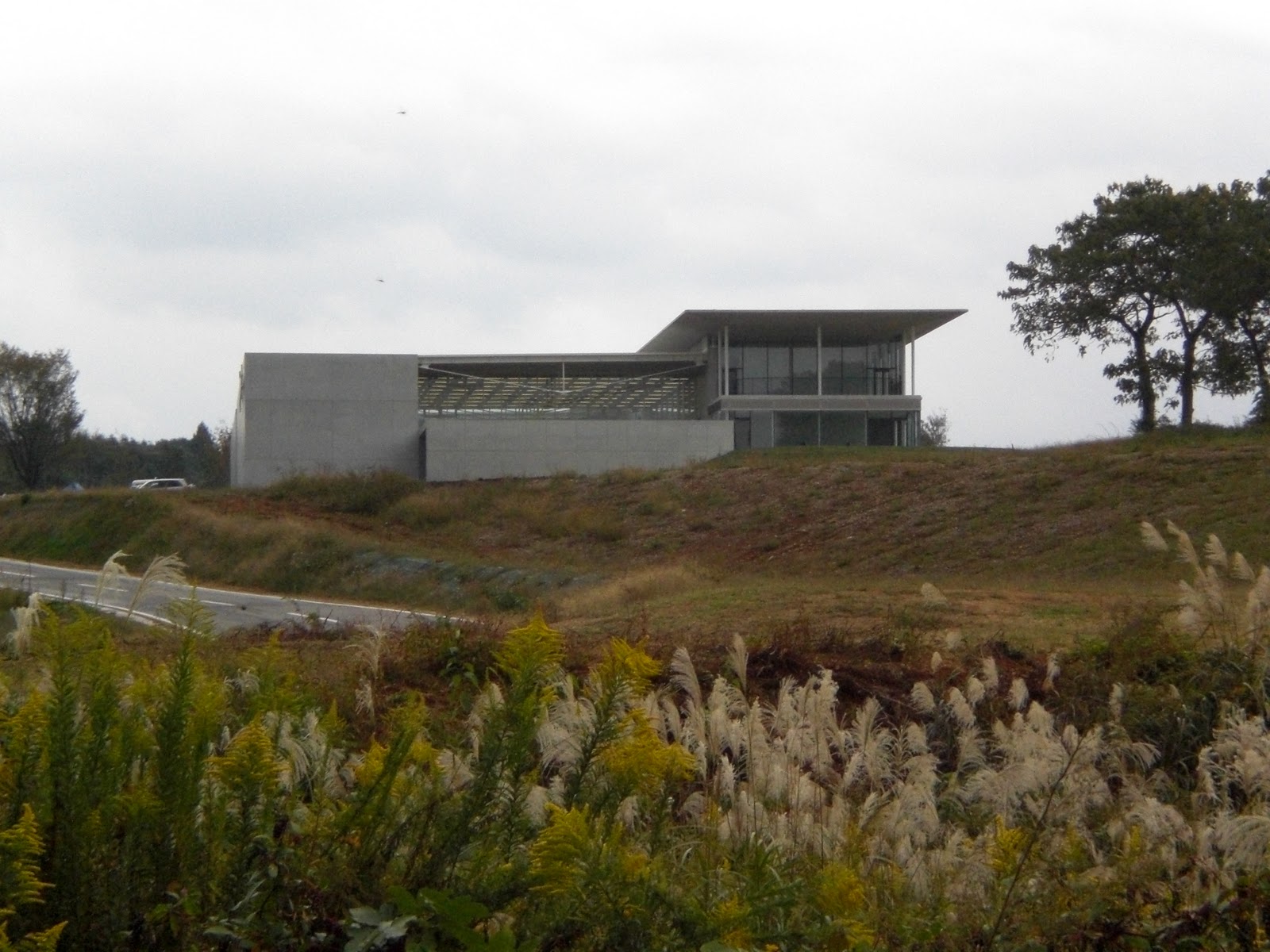
His business’s success has allowed him to open a new company headquarters on a hilly ranch site four times as large as the Tokyo Dome baseball park in the Shitada District of Sanjo City in April. The site was chosen because Snowpeak deals with the production and distribution of outdoor gear, and the areas surrounding the new building are some of the best camping sites around.

Along with the new headquarters, 60 of his 130 staff members moved to Shitada, planning, designing, producing, selling and even repairing high class goods there in this all-in-one building. The office building won an award for Good Design from Japan Institute of Design Promotion.


He said Snowpeak brand goods are more luxurious than those used by most traditional campers, but they are also highly user-friendly and fashionable. Likewise, his camping sites are of a more sanitary-design and are as equally luxurious as the goods he sells. However, his company doesn’t just please those of us who enjoy camping right here in Sanjo, it also has shops throughout Japan as well as foreign countries such as Korea, Germany and the USA.

Mr. Yamai’s unstoppable quest for excellence didn’t just start after he came to be president of the company. Even back in his high school days when he was on the baseball team, he played with the sole goal of playing for the national high school championship at Koshien Stadium. He had dedicated his whole life to that point to baseball.

After entering university in Tokyo, he pursued his outside interests with far more dedication than he gave to his course work. However, as he grew to be a full-fledged member of society, he began to channel the same energy he had spent on sports and partying to helping others. When a devastating flood hit Sanjo City in 2004, he volunteered to help in the cleanup every day for more than three weeks, without ever visiting his office. Likewise, after the great 3/11 earthquake, his company collected a total of 10,000 tents, sleeping bags, mats and rugs from all over Japan and provided them to many victims and many volunteers who were helping out with search, rescue and restoration projects.

These days, a lot of his energy is devoted to sharing his love for nature and healthier lifestyles. When he’s not doing that, he is helping to foster young and energetic entrepreneurs and business people by volunteering his experience and knowhow. When he was still an active member of the Japan Junior Chamber, the older members tutored him and helped him to “grow up” and he now feels compelled to give back.


As for his company, he hopes that it will be able to serve 100,000 customers a year in five years. As a “citizen of the earth,” as he sometimes refers to himself, he simply wants to contribute positively to society.

Sunday, October 16, 2011

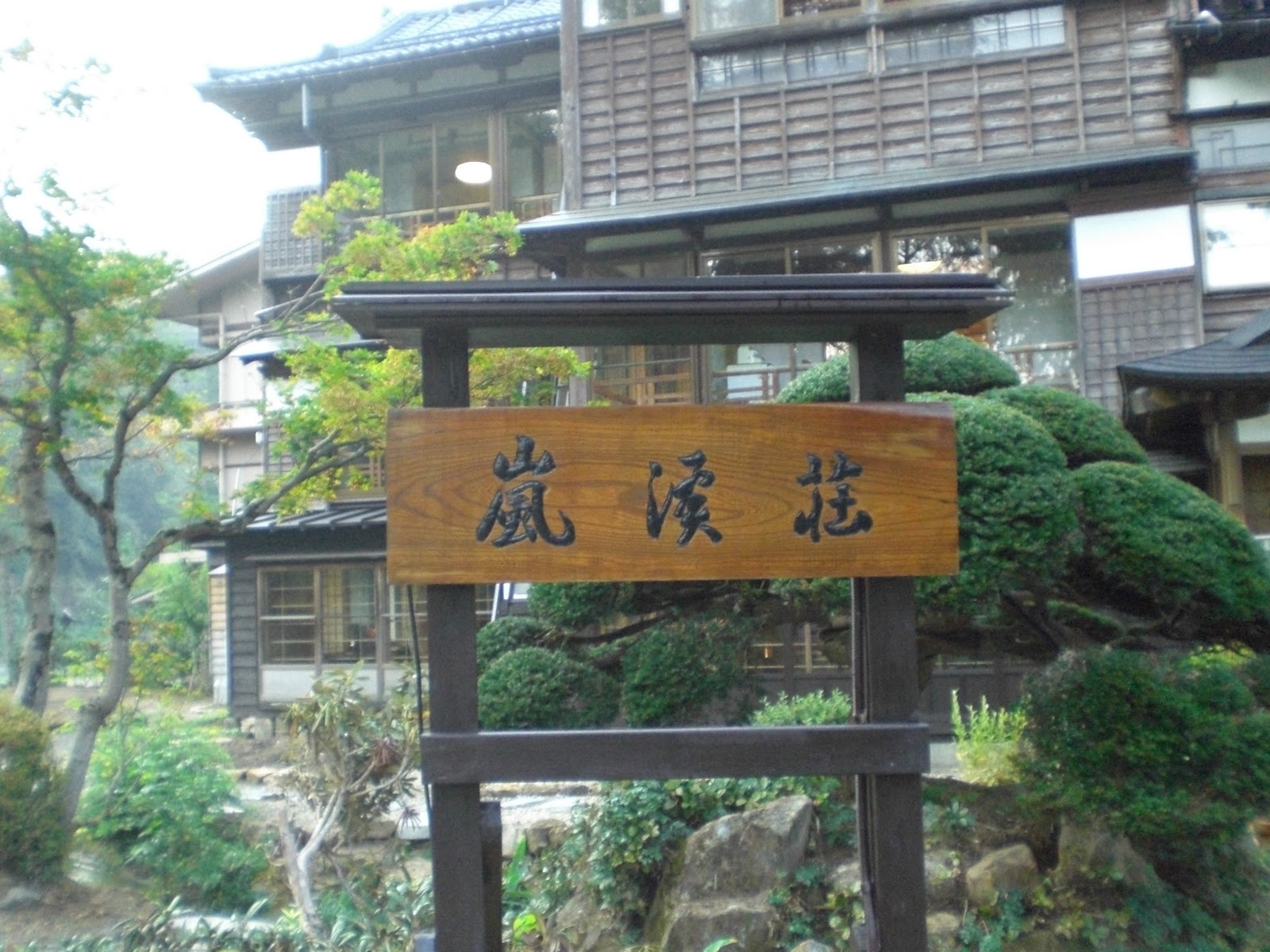
Time-Honored Classy Onsen Ryokan, Rankeiso

Rankeiso, located in the Shitada area of Sanjo City, is popular among “onsen” lovers young and old as it is one of Niigata’s best hot spring inns. http://www.rankei.com/

When I was a high school teacher in Sanjo, I often volunteered to be an organizer of school parties in order to choose Rankeiso as the venue as it is an ideal setting for relaxing parties.


Recently, I met Rankeiso’s president, Keigo Otake, who is the fourth-generation manager of this family-owned inn. Though he comes across as a bit shy, he is not timid when he speaks about the three points that make his inn one of Japan’s best secluded hot spring spots.


First, he noted, the quality of the inn’s onsen baths is outstanding. The cold spa water is quite rich in minerals and surprisingly tasty. It is a little salty and tastes like seaweed tea. He even uses the water to make Onsen-gayu, a special type of rice porridge for breakfast.


A second factor that makes this inn an unforgettable experience, he noted, is the tantalizing cuisine. Four distinguished chefs turn any of the inn’s traditional country-styled dishes into a high-class banquet. (Having recently attended a family reunion at the Rankeiso where we partook of many of the inn’s best delicacies, I can personally attest that this is no exaggeration.)
              
The third element, he touched on, and perhaps the most important, is how the inn lies in gentle harmony with it natural surroundings. Scenic woods envelope the inn while the Sumon River runs beside it, allowing those who come there to feel as one with nature.
              

During our talk, Mr. Otake noted that the “Go” in his given name, Keigo, means “five.” In this way, his parents and grandparents consigned in him five wishes. He didn’t say a lot, but he knows what his family expected of him and he is obviously full of high hopes for his inn.
              
He didn’t brag about his high ambitions to expand his business, but he did modestly mention that he would like to keep pace with the times. He then concluded my interview by saying he envisions the future of his inn, the village and its people, all the time.

Saturday, October 1, 2011

English Lessons in San Francisco


Niigata University of Management, where I teach English pedagogy, sends students to overseas schools each year. Students here have opportunities to visit campuses in China, South Korea, Taiwan and the United States.

Last month from September 4th to 17th, I escorted a small group of students who wanted to study English to San Francisco. They attended Notre Dame de Namur University in Belmont, south of San Francisco, which has an affiliated language school within the campus that offered them a two-week special language course.

I was responsible for taking care of them during the program, but while I stayed at a local motel in Belmont, the students were staying with host families in San Francisco. It was good for them to be able to meet and learn how American students spend their home and campus lives.

The language school, named TALK, offers English courses to meet the needs of a wide variety of students. My students took a placement examination at the beginning of the course, and were put into suitable small-sized classes.

Notre Dame de Namur University was founded in 1851 and is one of the oldest universities in California. (http://www.ndnu.edu/) The campus is located about twenty minutes south of San Francisco. The famous Silicon Valley, home to Google, Yahoo, Intel and Apple, is ten minutes away, and it is also a close neighbor Stanford University. Like San Francisco, Belmont’s weather is gorgeous, always mild, cool and clear, though walking around in the sun can still leave you sweaty.

The language school provided a lot of extra activities, such as sightseeing trips to downtown San Francisco, tickets to a San Francisco Giants’ baseball game and a bicycle outing that took us across the Golden Gate Bridge. As a proponent of international exchange programs, I believe programs like this truly expand a student’s knowledge and provide the kind of perspective and experience needed in today’s global society.